FDM
Fused Deposition Modeling
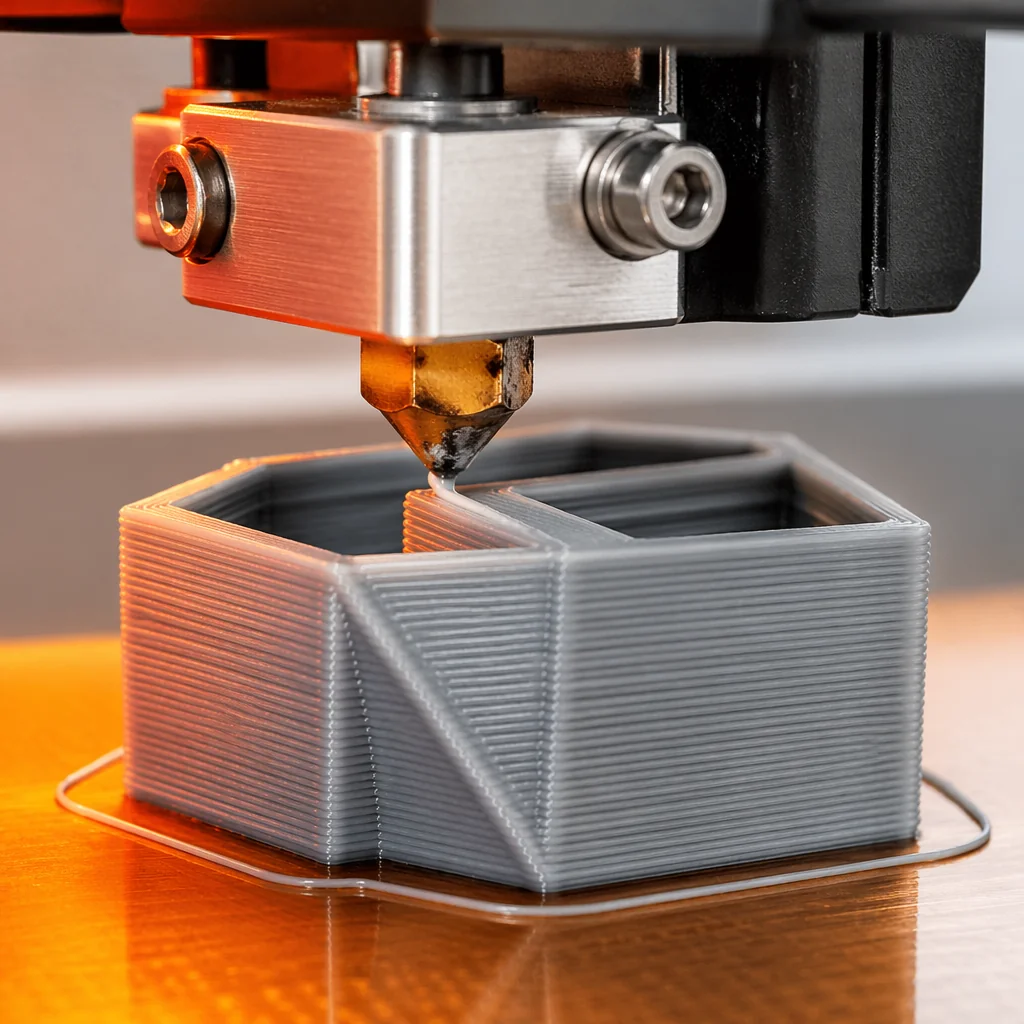
FDM technology builds parts layer by layer by extruding thermoplastic filament through a heated nozzle. The most widely used 3D printing technology, ideal for functional prototypes, tooling, and end-use parts.
Strong mechanical properties
Wide material selection (PLA, ABS, PETG, Nylon, etc.)
Large build volumes available
Cost-effective for functional parts
No post-curing required
Layer Resolution
50-400 microns
Dimensional Accuracy
±0.5% (±0.15mm)
Typical Cost/Part
$ - $$
SLA
Stereolithography
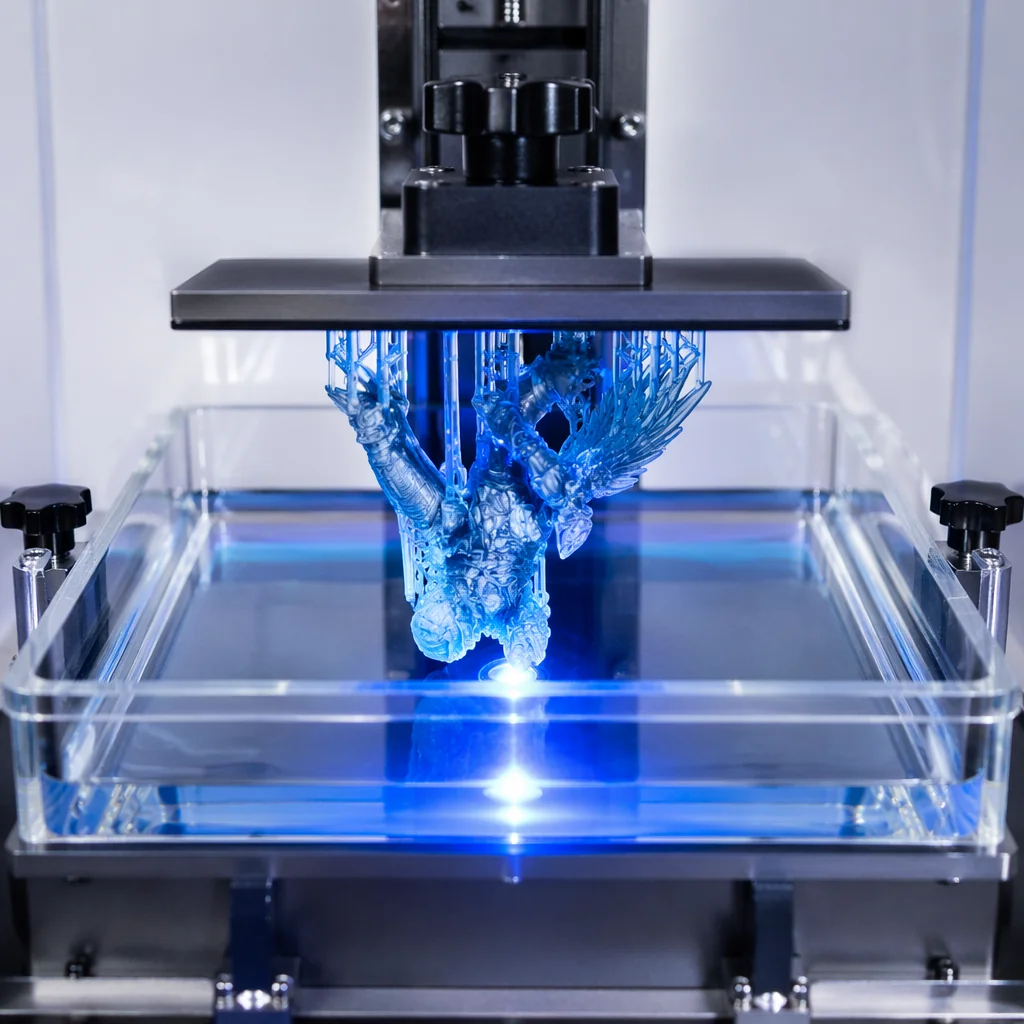
SLA uses a UV laser or LCD screen to cure liquid resin into solid parts. Delivers the highest resolution and smoothest surface finish of any desktop 3D printing technology.
Exceptional surface finish and detail
Highest resolution (25-100 microns)
Watertight, isotropic parts
Ideal for jewelry, dental, miniatures
Castable resin options available
Layer Resolution
25-100 microns
Dimensional Accuracy
±0.2% (±0.05mm)
Typical Cost/Part
$$ - $$$